Coconut Cream vs. Cream of Coconut: The Difference
By Dave C & Boozeopedia AI Workflow
See how we write our articles
Coconut Cream vs. Cream of Coconut: The Difference
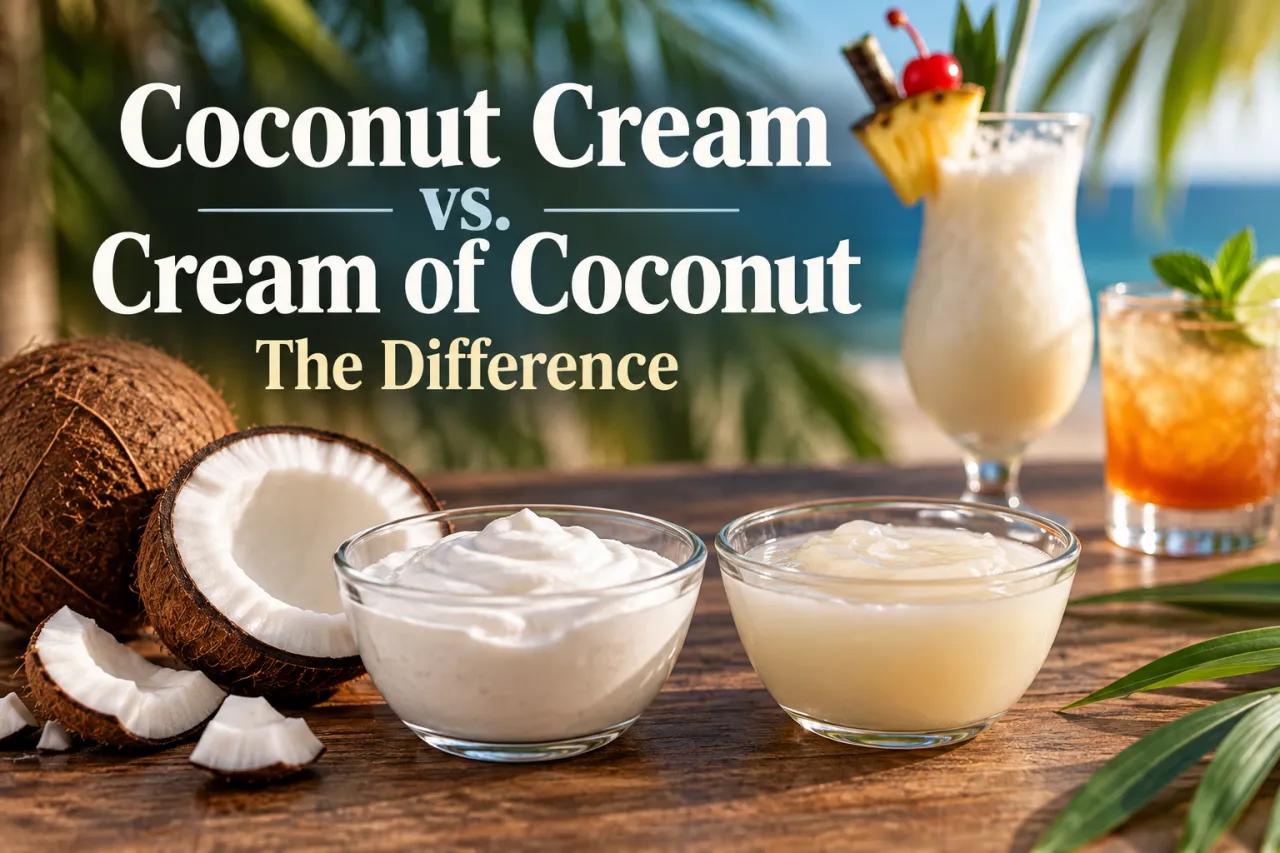
Coconut cream and cream of coconut are easy to confuse. The names are nearly identical, both taste like coconut, and both can turn up in tropical drinks.
The important difference is sugar.
Coconut cream is generally an unsweetened, rich coconut product. Cream of coconut is a sweetened coconut product. That means cream of coconut isn't just adding coconut flavor and texture to a cocktail. It's also acting as a sweetener.
Use the wrong one without adjusting the rest of the recipe and a balanced tropical drink can quickly become either too sweet or noticeably dry.
Coconut Cream vs. Cream of Coconut at a Glance
| Coconut Cream | Cream of Coconut | |
|---|---|---|
| Usually sweetened? | No | Yes |
| Texture | Thick and rich | Thick, smooth, often syrupy |
| What it adds to a cocktail | Coconut flavor and body | Coconut flavor, body, and sweetness |
| Common non-cocktail uses | Curries, sauces, baking | Desserts and sweet drinks |
| Can you substitute it? | Yes, but you may need sweetener | Yes, but you may need to reduce other sweeteners |
Brands vary, so read the ingredient list rather than relying only on the name on the front of the container.
What Is Coconut Cream?
Coconut cream is a thick, concentrated coconut product with more body than typical coconut milk.
Many versions intended for cooking are unsweetened. Thai Kitchen's unsweetened coconut cream, for example, lists coconut, water, and guar gum as its ingredients.
Because it doesn't automatically bring a large amount of sugar with it, coconut cream gives a bartender more control over sweetness. It can add rich coconut flavor and a fuller texture while letting fruit juice, syrup, liqueur, or another ingredient handle the sweet side of the drink.
Coconut cream can separate or firm up when cold. Shake the container well or stir the contents together before measuring if necessary.
What Is Cream of Coconut?
Cream of coconut is a sweetened coconut product.
Commercial versions combine coconut with sugar to produce a thick, smooth ingredient designed for desserts and drinks. Goya's cream of coconut, for example, lists coconut milk and sugar as its first two ingredients. Coco López describes its cream of coconut as coconut cream blended with cane sugar.
In a cocktail, cream of coconut does several jobs at once:
- adds coconut flavor
- provides sweetness
- gives the drink body
- softens sharp citrus and strong spirits
That makes it particularly useful in tropical drinks, but it also means it shouldn't automatically replace unsweetened coconut cream ounce for ounce without considering the rest of the recipe.
Why the Difference Matters in Cocktails
Think of sweetness as part of the ingredient, not something separate.
If a cocktail calls for unsweetened coconut cream and you replace it with cream of coconut, you're adding sugar along with the coconut flavor. In a drink that already contains sweet fruit juice, syrup, or liqueur, that can push the balance too far.
Going the other direction creates the opposite problem.
If a recipe depends on cream of coconut for sweetness and you use unsweetened coconut cream instead, the drink may have plenty of texture but taste sharper or less balanced than intended.
Neither product is inherently better. They simply do different jobs.
Which One Goes in a Piña Colada?
This is where the terminology gets especially confusing because Piña Colada recipes don't all use the same coconut product.
The current International Bartenders Association specification calls for coconut cream, along with white rum and fresh pineapple juice. The IBA does not specify a particular coconut-cream brand or define a sweetness level in the recipe.
Boozeopedia's Piña Colada recipe also uses coconut cream: 1 1/2 ounces of light rum, 1 ounce of coconut cream, and 1 1/2 ounces of pineapple juice, blended with crushed ice.
Other Piña Colada recipes use sweetened cream of coconut instead.
That's not a minor wording difference. If you're switching between the two styles, the amount of sugar in the finished drink changes too.
The safest rule is simple: follow the coconut ingredient named in the recipe you're making, and check whether the product in your hand is sweetened.
A Painkiller Shows the Difference Clearly
Boozeopedia's Painkiller cocktail provides a useful contrast.
It calls specifically for cream of coconut, along with dark rum, pineapple juice, orange juice, and nutmeg.
Here the sweetened coconut ingredient is part of the drink's balance. Replacing it with unsweetened coconut cream without adding any sweetness would noticeably change the finished cocktail.
The Piña Colada and Painkiller are both rich tropical rum drinks, but Boozeopedia's recipes deliberately use different coconut ingredients.
Can You Substitute Coconut Cream for Cream of Coconut?
Yes.
If a recipe calls for cream of coconut and you only have unsweetened coconut cream, use the coconut cream for flavor and texture, then add sweetness separately.
Simple syrup is the easiest option.
Don't worry about finding a supposedly universal conversion ratio. Coconut products vary by brand, and the other ingredients in the cocktail affect how much sugar tastes right.
A better approach is:
- Add the coconut cream.
- Add a small amount of simple syrup.
- Mix or blend the drink.
- Taste.
- Add a little more syrup if the drink is still too tart or dry.
This gives you more control than dumping in a large amount of sugar from the beginning.
Can You Use Cream of Coconut Instead of Coconut Cream?
Usually, but account for the extra sweetness.
If the recipe contains simple syrup or another dedicated sweetener, reduce or omit that first.
If there isn't another sweet ingredient you can easily adjust, start with a little less cream of coconut and taste the finished drink before making further changes.
In a drink containing citrus, a small increase in acidity can sometimes restore balance, but don't automatically add lime just because the drink tastes sweet. Adjustments should still make sense for the cocktail you're making.
Frozen drinks deserve extra caution because very cold temperatures can make sweetness seem less obvious.
Our guide to making better frozen cocktails at home follows the same principle: taste the drink and fix the actual problem rather than automatically adding more sugar, ice, or liquid.
What About Coconut Milk?
Coconut milk is a third product and shouldn't be confused with either of them.
Coconut milk is generally thinner than coconut cream. Unsweetened versions can provide coconut flavor, but replacing coconut cream with coconut milk will usually produce a lighter, less rich drink.
Replacing cream of coconut with unsweetened coconut milk changes even more: you're reducing both body and sweetness.
You can still make that substitution in a pinch, but you'll probably need to compensate for both.
How to Buy the Right Coconut Product
The ingredient list is your best guide.
For coconut cream, look for products labeled something like:
- coconut cream
- unsweetened coconut cream
- no added sugar
For cream of coconut, sugar should appear prominently in the ingredient list.
Don't judge only by thickness. Both products can become very thick when chilled, and packaging terminology isn't perfectly standardized across every brand.
If the distinction matters to the cocktail, spend the extra few seconds checking the label.
The Bottom Line
The easiest way to remember it is:
Coconut cream gives you coconut richness. Cream of coconut gives you coconut richness plus sweetness.
Both belong behind the bar, and both can make excellent tropical cocktails. Just don't treat them as identical.
If you're substituting one for the other, adjust the sugar rather than wondering afterward why your Piña Colada suddenly tastes like coconut frosting.