
Why Your Homemade Cocktails Never Taste Quite Right
Your cocktail recipe might be fine. From ice and dilution to citrus and measuring, here are seven common reasons homemade drinks taste off and how to fix them.
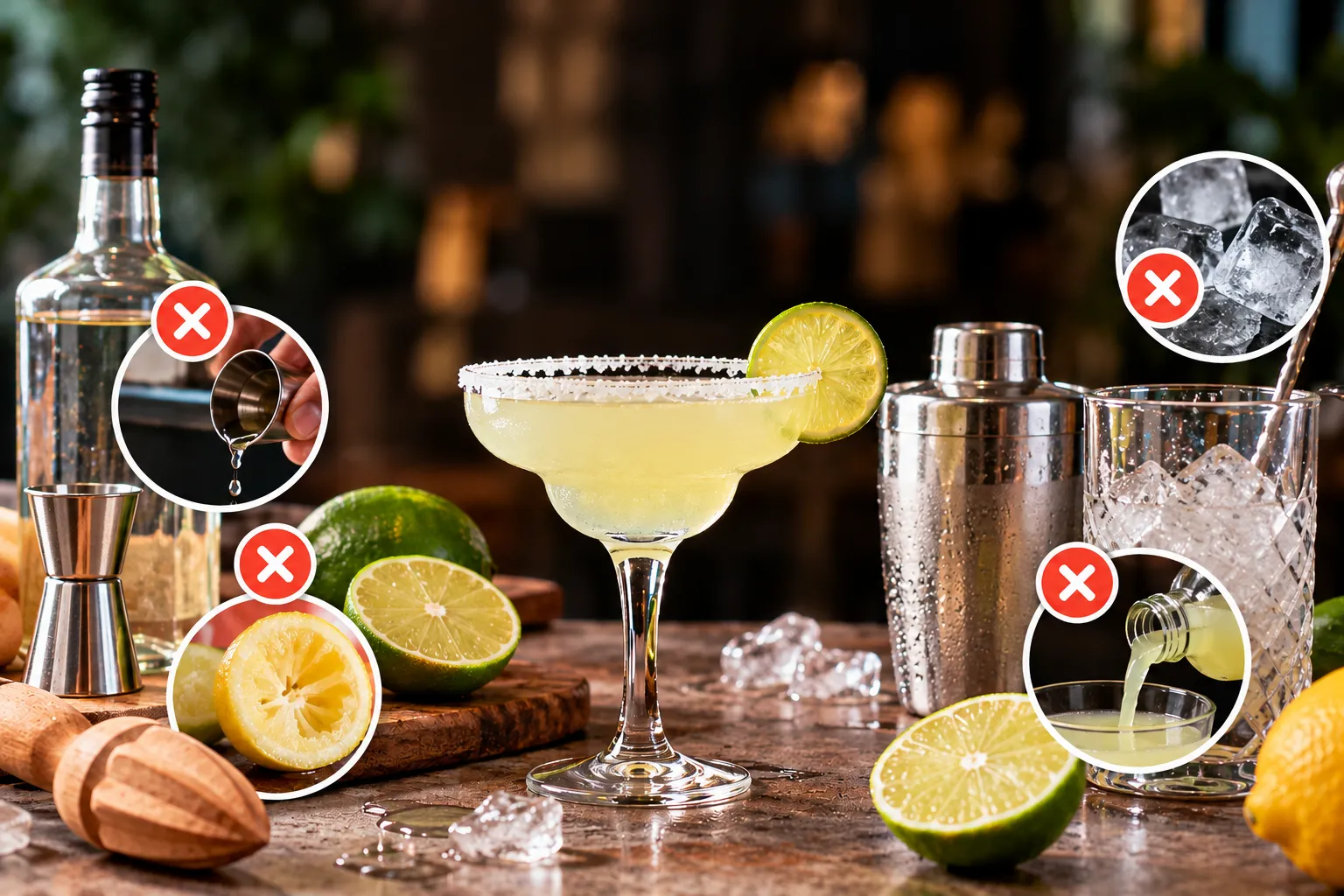
You follow the recipe, measure out the ingredients, add some ice, and give everything a shake. The result looks like a cocktail. It even smells like one.
But something isn't quite right.
Maybe your Margarita tastes too sour. Your Old Fashioned has a harsh alcohol bite. Or the Daiquiri you made at home tastes nothing like the one you ordered at your favorite bar.
The problem isn't necessarily the quality of your liquor. More often, it's a handful of small details that are easy to overlook.
And no, we're not suggesting that every cocktail requires freshly squeezed juice, expensive equipment, or perfectly precise measurements. Sometimes you've just got to work with what's in the kitchen.
Here are seven common reasons homemade cocktails don't taste quite right, along with some practical ways to improve them.
1. You're Measuring by Eye
A little rum, a splash of lime, some syrup, and you're good to go.
Except that "a splash" is a remarkably unreliable unit of measurement.
And before anyone points it out, yes, we use the word splash in some of our own Boozeopedia recipes and articles. We're guilty of it too.
There's a time and place for it. When you're topping off a drink or making a small adjustment to taste, a splash can be perfectly reasonable. But when you're balancing a cocktail with only three or four ingredients, measurements become much more important.
The classic Daiquiri is a good example. Rum, lime, and sugar sound simple enough, but they're doing three different jobs. The rum provides the base, the lime adds acidity, and the syrup balances that sharpness.
Too much syrup and the drink becomes cloying. Too much lime and it turns aggressively tart.
The fix: Use a jigger or another small measuring tool when proportions really matter.
Start with a reliable recipe, make it as written, and adjust from there. Once you understand how the original tastes, experimenting becomes much easier.
And if a recipe calls for a splash of something? Use your judgment. Sometimes that's exactly what the drink needs.
2. You're Not Paying Attention to Your Ice
Ice might be the most overlooked ingredient in home cocktails.
It's easy to assume that more ice automatically means a more watery drink. After all, ice melts into water.
But the relationship is more complicated than that.
Ice cools a drink by absorbing heat, largely as it melts. That melting also introduces water, which is why chilling and dilution are closely connected.
The amount, size, temperature, and condition of your ice all influence how your drink chills.
Smaller pieces generally have more surface area relative to their volume, allowing them to exchange heat with the drink more quickly. Crushed ice, for example, behaves differently from large cubes.
Ice that's already wet and partially melted can also introduce extra water before you've even started mixing.
And if you use only a couple of small cubes, you may not have enough ice to chill the drink properly.
The fix: Use a generous amount of solid, cold ice when shaking or stirring cocktails.
Ordinary freezer ice is fine. You don't need perfectly clear cubes carved by hand.
Just remember that more ice doesn't automatically mean more or less dilution. What matters is how the ice and drink interact during mixing.
3. You're Forgetting That Water Is an Ingredient
Here's something many home bartenders overlook: a little water often makes a cocktail taste better.
When you shake or stir a drink with ice, some of that ice melts. That dilution lowers the alcohol concentration, softens the intensity of the drink, and changes how its flavors and aromas come across.
Without enough dilution, some cocktails taste harsher or more concentrated than intended.
Consider the classic Old Fashioned. Boozeopedia's version combines bourbon, sugar, Angostura bitters, and a little water. Stirring it with ice adds further dilution while chilling the drink.
The water isn't there to make the whiskey disappear. It helps bring the cocktail into balance.
The fix: Shake or stir until the drink is properly chilled and diluted, rather than stopping as soon as the ingredients are combined.
There's no single mixing time that works perfectly for every cocktail. The type of ice, ingredients, equipment, and mixing technique all make a difference.
And yes, you can have too much dilution.
A cocktail that tastes watery may have received more water than its recipe can handle. That can happen during preparation or while it sits over melting ice.
But here's the important distinction: a watery cocktail isn't necessarily a warm cocktail. It can be very cold and still taste weak.
The goal isn't to avoid dilution. It's to get the right amount.
4. Your Citrus Isn't Doing Its Job
Fresh lemon and lime juice can make a noticeable difference in cocktails, especially drinks where citrus is one of the main ingredients.
But here's something worth acknowledging: not everyone keeps fresh lemons and limes in their kitchen.
We don't always insist on freshly squeezed citrus in every Boozeopedia recipe, either. Making a decent cocktail at home shouldn't require an emergency trip to the grocery store.
Bottled lime or lemon juice can be a reasonable substitute when that's what you have available.
Will it taste exactly the same? Not necessarily.
Processing, preservatives, and storage can affect bottled citrus juice. Some products taste noticeably different from freshly squeezed juice, particularly in simple drinks where citrus has nowhere to hide.
And not everything labeled as a lime mixer is plain lime juice. Some products contain added sugar, which changes the balance of the cocktail.
Even fresh citrus varies. One lime might taste sharper than another.
The fix: Use fresh citrus when it's convenient, especially in drinks like Margaritas, Daiquiris, Gimlets, and Whiskey Sours where citrus plays a major role.
But if bottled juice is what's in your refrigerator, use it. Choose an unsweetened product when the recipe calls for plain juice, and taste the result before making adjustments.
A cocktail made with bottled lime juice isn't automatically a bad cocktail. And a poorly balanced drink made with freshly squeezed lime isn't automatically a good one.
Fresh ingredients can help, but balance matters more than bragging rights.
5. You're Shaking Everything
Not every cocktail needs a vigorous workout.
Shaking and stirring both chill and dilute drinks, but they produce different textures.
Shaking introduces air, creating tiny bubbles that can give a cocktail a lighter, more aerated texture. That's useful for many drinks containing citrus juice, cream, or other ingredients that benefit from vigorous mixing.
Stirring introduces less air and is typically preferred for spirit-forward cocktails where a smooth texture and clear appearance are desirable.
That's why a classic Daiquiri is shaken, while an Old Fashioned is stirred.
Can you shake an Old Fashioned? Certainly. Nobody is going to confiscate your cocktail shaker.
But the result will have a different texture from the traditional preparation.
The fix: Follow the preparation method in a well-tested recipe before experimenting.
As a general starting point, shake cocktails containing citrus juice and stir drinks made primarily from spirits, vermouth, and bitters.
It's a guideline rather than an unbreakable rule, but it's a useful one.
6. Some of Your Ingredients Have Seen Better Days
You probably wouldn't make lemonade with a lemon that's been sitting cut open in the refrigerator for two weeks.
Yet it's surprisingly common to make cocktails with ingredients that have seen better days.
Consider tonic water.
A Gin and Tonic made with freshly opened, cold tonic will have a livelier fizz than one made with tonic that's lost much of its carbonation.
Once a carbonated drink is opened, dissolved carbon dioxide gradually escapes. That's why an old bottle of tonic can make a highball taste disappointingly flat.
Vermouth presents another problem.
Unlike gin, vodka, or whiskey, vermouth is wine-based. Once opened, its flavors gradually change through oxidation.
That half-empty bottle of dry vermouth that's been sitting in a warm cupboard for six months probably isn't helping your Martini.
Our guide to storing vermouth properly explains why opened bottles belong in the refrigerator and how to tell when they're past their best.
The fix: Use fresh carbonated mixers, refrigerate opened vermouth, and check the condition of your ingredients.
You don't have to buy expensive products. Well-stored everyday ingredients can be a better choice than premium ingredients that have been sitting around too long.
7. You're Ignoring the Temperature of the Glass
You make a beautifully chilled cocktail and pour it into a room-temperature glass.
Almost immediately, heat from the glass begins warming the drink.
Temperature matters because it affects how we perceive flavor, aroma, and alcohol. A cocktail designed to be served very cold can taste quite different as it warms.
This doesn't mean every cocktail should be served as cold as physically possible. Different drinks are intended to be enjoyed at different temperatures.
But if a recipe calls for a chilled cocktail served without ice, starting with a cold glass helps preserve that intended temperature.
This is particularly useful for drinks like Martinis and Daiquiris.
The fix: Chill the glass before making your drink.
Put it in the refrigerator or freezer briefly, or fill it with ice and water while you prepare the ingredients. Empty it before pouring.
That's it. No special glassware required.
How to Fix a Cocktail That Doesn't Taste Right
Sometimes the ingredients are already mixed and the drink still needs help.
Before starting over, figure out what's actually wrong.
| The problem | What to try |
|---|---|
| Too sweet | In a citrus-based cocktail, try a little additional unsweetened citrus juice. |
| Too sour | Add a small amount of sweetener, if appropriate for the drink. |
| Too harsh or boozy | Check whether it needs more chilling or dilution, or whether the proportions are off. |
| Too watery | Check your measurements and ice. Avoid starting with wet, partially melted ice, and strain promptly when the recipe calls for it. |
| Too flat | Check whether carbonated mixers have lost their fizz or other ingredients have lost their flavor. |
| Too warm | Chill the glass and make sure the drink is properly chilled during preparation. |
These aren't universal fixes.
A Martini that's too strong doesn't necessarily need lemon juice, and adding sugar won't rescue a cocktail that's already watered down.
Taste the drink, identify the likely cause, and change one thing at a time.
Try This With Your Next Cocktail
Here's an easy way to see how much these details matter.
Make a classic Daiquiri using a measured recipe.
Use lime juice, measure all three ingredients accurately, shake with plenty of ice, and strain into a chilled glass.
Fresh lime is our preference for this particular drink, but if you've only got bottled juice, you can still try it. Just be aware that the result may taste different.
Taste the cocktail before making any changes.
The next time you prepare one, pay attention to how a small adjustment in sweetness, citrus, or mixing changes the result.
Change one thing at a time, and you'll begin to understand what each ingredient and technique contributes.
That's how you start making cocktails that suit your own taste rather than simply following instructions.
Better Cocktails Don't Require a Better Liquor Cabinet
It's tempting to think the difference between a decent homemade cocktail and a really good one is a more expensive bottle.
Sometimes a better ingredient helps. But spending more money won't fix poor proportions, flat mixers, excessive dilution, or a drink that's served too warm.
And while fresh ingredients and precise measurements can make a difference, there's still room for shortcuts, substitutions, and a little improvisation.
Start with a good recipe, pay attention to the details, and taste what you're making.
You might be surprised how much better your next cocktail turns out without buying a single new bottle.
Related Articles
10 Essential Bar Tools Every Cocktail Enthusiast Needs for a Professional Home Bar
Ready to make cocktails like a pro? Start by setting up your home bar with these 10 essential bar tools. This guide will walk you through the must-have equipment every...
Does Vermouth Go Bad? How to Store It Properly
Vermouth doesn’t keep like whiskey or gin once the bottle is open. Learn how long opened vermouth lasts, why it belongs in the fridge, and how to tell when its...

Frozen Cocktails 101: Better Blended Drinks at Home
Frozen cocktails are easy to make badly and surprisingly easy to make well. Here’s how to get the texture right, fix common blender problems, and choose a drink worth blending.