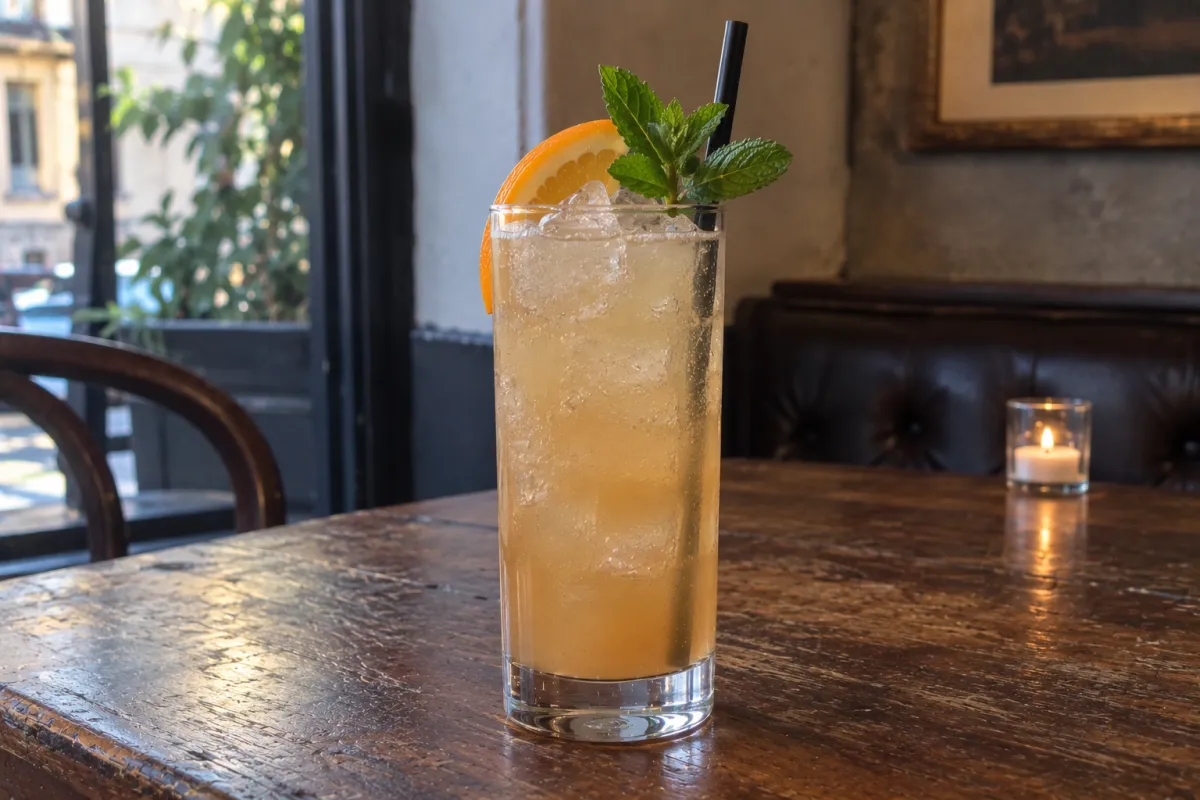
The Suffering Bastard pairs equal measures of Cognac and gin with tart lime, aromatic bitters, and a lively ginger beer finish. It is unusual but remarkably coherent: Cognac adds fruit and oak, gin brings botanical dryness, and ginger beer stretches the combination into a cool, brisk long drink served over plenty of ice.
Born in Wartime Cairo
The Suffering Bastard is attributed to bartender Joe Scialom at Shepheard's Hotel in Cairo in 1942, during World War II. The drink later developed several competing versions, including rum-heavy recipes associated with tiki culture. The current IBA specification returns to the Cognac-and-gin family of the drink rather than those later tropical interpretations.
What You'll Need
Ingredients
- Cognac - supplies fruit, oak, and a rounded brandy backbone.
- Gin - adds juniper and botanical dryness alongside the Cognac.
- Lime Juice - provides the sharp acidity that ties the two spirits together.
- Angostura Bitters - contributes concentrated spice and aromatic depth.
- Ginger Beer - lengthens the drink with carbonation, sweetness, and ginger heat.
Brandy can replace Cognac, which the IBA explicitly permits. If your ginger beer is particularly sweet, choose a drier brand rather than changing the spirit or lime proportions.
Equipment
- Cocktail shaker
- Jigger
- Collins glass
- Bar spoon
Two Spirits, One Long Drink
Cognac and gin are an uncommon pairing, but each fills a different role here. The Cognac gives the drink body and fruit, while gin keeps the profile dry and aromatic. Lime cuts through both, bitters bridge their spice notes, and ginger beer turns the compact shaken base into a refreshing highball-style serve.
Substitutions & Variations
Use a quality brandy in place of Cognac for the IBA-approved alternative. Ginger ale produces a softer, sweeter drink with less ginger intensity, though ginger beer remains the defining mixer. Some later Suffering Bastard recipes use rum and tropical ingredients, but those belong to a separate tiki-influenced branch of the cocktail's history.
Helpful Tips
Use cold ginger beer so the drink stays crisp after topping. Do not strain away the shaking ice, since the IBA method specifically calls for pouring the drink unstrained. Add the ginger beer slowly to preserve carbonation, then stir only briefly. Clap the mint lightly between your hands before garnishing to release its aroma without bruising it.