French Drinks: Wine, Aperitifs & Classic Cocktails
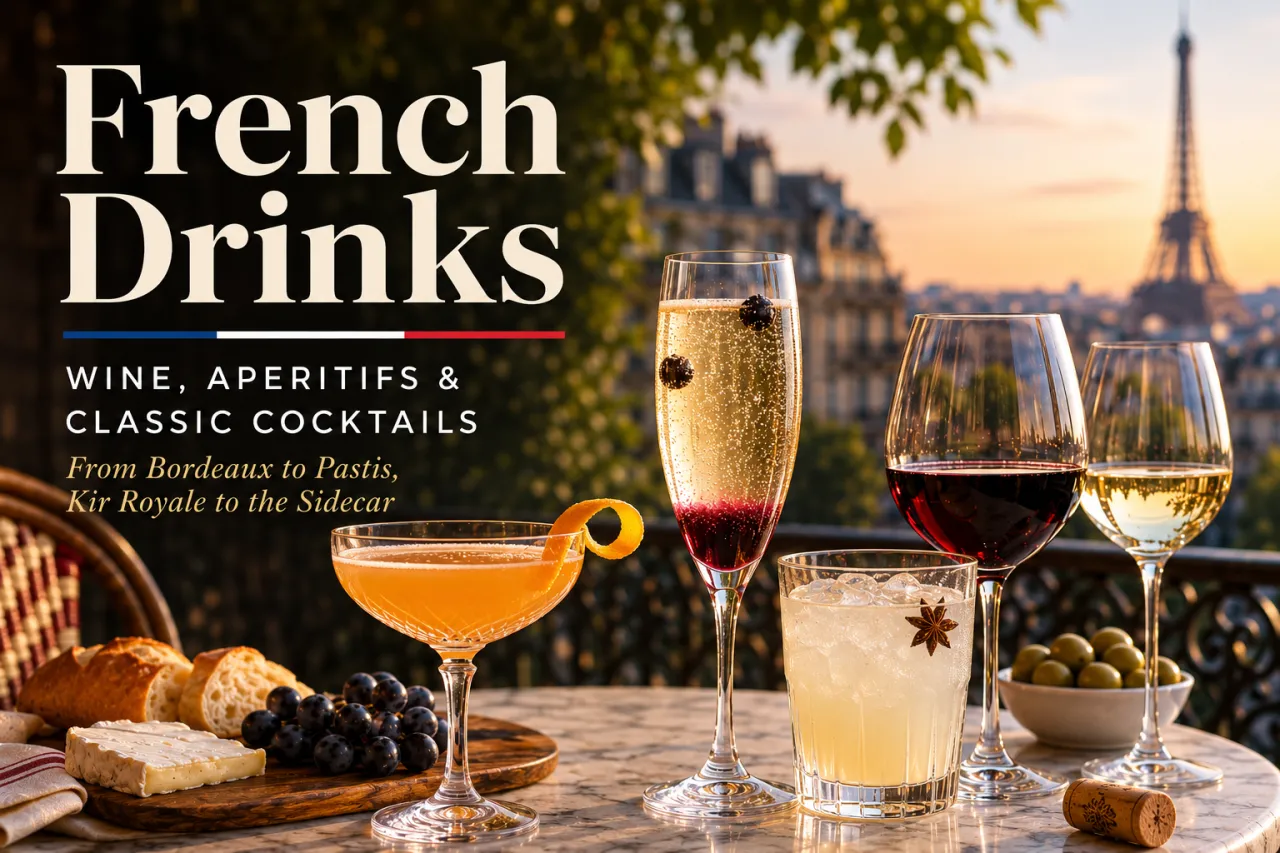
By Dave C & Boozeopedia AI Workflow
See how we write our articles
Updated from the original June 2024 article: This guide has been refreshed with more practical information on French wine, spirits, aperitifs, and cocktails, and revised to remove its original 2024 Olympics framing.
French drinks cover a lot more than Champagne. France is home to some of the world's best-known wine regions, distinctive spirits such as Cognac and Armagnac, anise-flavored pastis, fruit liqueurs, and cocktails that have become bar standards well beyond France.
You don't need an encyclopedic knowledge of French wine or a shelf of expensive bottles to explore them. A few regions, ingredients, and classic serves provide a useful starting point.
French wine: four regions worth knowing
France has dozens of wine regions and appellations, so trying to understand all of them at once isn't especially helpful. These four give you a good sense of the range.
Bordeaux is especially known for red wines built around grapes such as Merlot, Cabernet Sauvignon, and Cabernet Franc. Styles vary considerably, from relatively approachable and fruit-forward wines to more structured bottles designed for aging.
Burgundy, or Bourgogne, is strongly associated with Chardonnay for white wine and Pinot Noir for red. Aligoté is another important local white grape, particularly when talking about the traditional Kir.
Champagne is both a region and a protected wine designation. True Champagne comes from the defined Champagne production area in France. In cocktails, its acidity and bubbles can add freshness and lift without requiring another mixer.
The Loire Valley is much harder to sum up in one bottle. Chenin Blanc, Sauvignon Blanc, Cabernet Franc, Melon Blanc, and other grapes appear across a wide range of dry, sweet, sparkling, white, red, and rosé wines.
For casual drinking or cocktails, there's rarely a reason to reach automatically for the most expensive bottle. Choose something that tastes good on its own and makes sense for what you're serving.
Aperitifs and after-dinner drinks
An apéritif is traditionally served before a meal, while a digestif is served afterward. These terms describe when the drink is served, not a promise that alcohol stimulates appetite or improves digestion.
Pastis
Pastis is an anise-flavored spirit closely associated with southern France. It's traditionally served diluted with cold water, which causes the liquid to turn cloudy.
The flavor is assertive, with strong licorice and herbal notes. If you enjoy anise, it can be remarkably refreshing when properly diluted. If you don't, pastis probably won't be the bottle that changes your mind.
Kir
The Kir is one of the simplest ways to explore the French apéritif tradition. It combines dry white wine with crème de cassis, a sweet blackcurrant liqueur associated with Burgundy.
The combination works because the wine supplies acidity and dryness while the cassis adds concentrated berry flavor and sweetness.
It's also an easy format to understand and adapt. Replace the still wine with Champagne and you arrive at the Kir Royale.
Cognac and Armagnac
Cognac and Armagnac are both French grape brandies, but they're distinct spirits with their own regions and production traditions.
Cognac comes from the Cognac appellation in western France. Depending on the bottle, you may find fruit, spice, vanilla, oak, and other flavors associated with distillation and barrel aging.
Armagnac comes from Gascony in southwestern France. It has its own protected production area and distillation traditions, so it shouldn't simply be treated as Cognac under another name.
Both can be enjoyed on their own, but Cognac also has a long life behind the bar. Its fruit and oak character works especially well with citrus and orange liqueur, which is one reason the Sidecar remains such a useful Cognac cocktail.
For mixing, you don't need to sacrifice an expensive sipping bottle. A good, reasonably priced Cognac with enough character to remain noticeable after citrus and liqueur are added is usually the better choice.
Three cocktails with French connections
Calling every drink in this section definitively "French" would make the history tidier than it really is. Cocktail origins are often disputed, and the Sidecar in particular has competing associations.
What these drinks do share is a strong connection to French ingredients, names, or drinking culture.
French 75
The French 75 combines gin, lemon juice, simple syrup, and Champagne.
Think of it as a sparkling gin sour. Lemon brings tartness, gin supplies the botanical backbone, a little sugar keeps the citrus in balance, and Champagne adds bubbles and dryness.
It's a good choice when you want something livelier than a straight glass of sparkling wine but still crisp and refreshing.
Kir Royale
The Kir Royale replaces the Kir's dry white wine with Champagne.
That one change gives the drink a different personality. Crème de cassis brings concentrated blackcurrant sweetness while Champagne adds acidity and carbonation, producing a lightly fruity sparkling cocktail that requires very little preparation.
Another dry sparkling wine can make a useful budget-friendly variation, although technically it won't be a Champagne-based Kir Royale.
Sidecar
The Sidecar heads in a different direction. It's a shaken sour built around Cognac, orange liqueur, and fresh lemon juice.
The Cognac contributes fruit and oak, lemon provides the acidity, and orange liqueur supplies both citrus flavor and sweetness.
Its exact birthplace isn't settled. Paris and London both appear in accounts of the drink's early history, so it's better described as a cocktail with a strong French connection than as an unquestionably French invention.
Of these three drinks, the Sidecar is the most spirit-forward and tart. The Kir Royale is the simplest and fruitiest, while the French 75 sits somewhere between them with gin, citrus, and sparkling wine.
How to explore French drinks at home
There's no need to build an entire French bar at once.
If wine is your main interest, start by trying bottles from different regions rather than chasing prestigious labels. A Bordeaux red, Burgundy Chardonnay or Pinot Noir, Loire white, and sparkling wine can show just how broad the category is.
If cocktails are the goal, a smaller shopping list works well:
- Crème de cassis opens the door to the Kir and Kir Royale.
- Cognac gives you the base for a Sidecar and plenty of other classic cocktails.
- Champagne or another dry sparkling wine works for sparkling cocktails and is useful on its own.
- Pastis is worth exploring if you already enjoy anise and herbal flavors.
From there, follow what you actually like. French drinking culture isn't one flavor, one bottle, or one style of service. A simple Kir, diluted pastis, glass of wine, and Cognac cocktail each offer a different way into the subject.
Start with the one that sounds good to you.