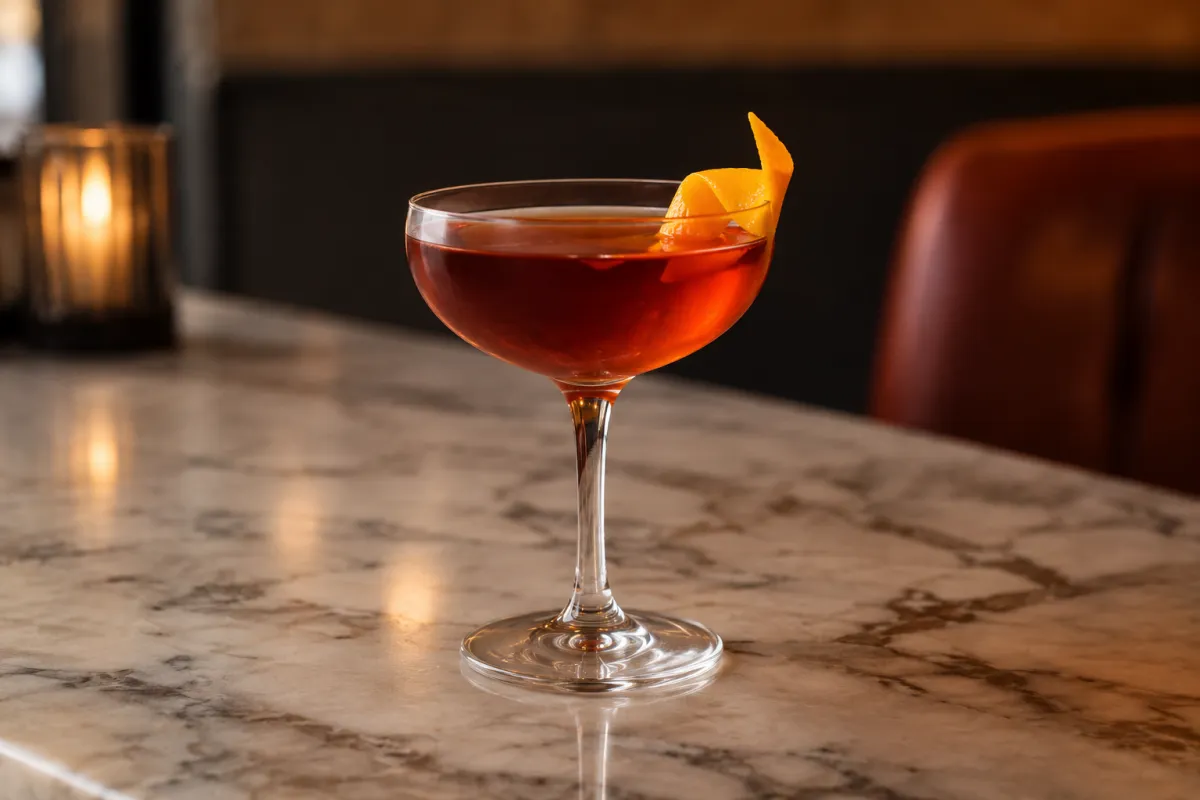
The Boulevardier brings bourbon, Campari, and sweet vermouth together in a rich, bittersweet cocktail built for slow sipping. Bourbon gives the drink weight and warmth, while the bitter aperitif and fortified wine create a layered herbal finish. This Boulevardier recipe is stirred with ice and served up, keeping the texture smooth and the flavors focused.
From 1920s Paris
The Boulevardier first appeared in print in Harry MacElhone's Barflies and Cocktails in 1927, where it was credited to American writer and Paris expatriate Erskine Gwynne. Gwynne also published a magazine called The Boulevardier. The original printed formula used equal parts, while the modern classic specification gives whiskey a larger share of the drink.
What You'll Need
Ingredients
- Bourbon - provides the cocktail's warm, oak-driven whiskey backbone.
- Campari - brings firm bitterness, citrus character, and herbal complexity.
- Sweet Vermouth - rounds the drink with sweetness, spice, and botanical depth.
Useful substitutions:
- Prefer more spice? Use rye whiskey instead of bourbon.
- No sweet vermouth? Another quality red or rosso vermouth is the closest practical substitute, though its botanical profile will change the drink.
Equipment
- Mixing glass
- Jigger
- Bar spoon
- Cocktail strainer
- Chilled Cocktail Glass
Where Whiskey Changes the Equation
The extra measure of whiskey is what gives this version its structure. Campari still brings a pronounced bitter edge, but bourbon adds enough richness and oak to keep it from dominating. Sweet vermouth bridges the two, leaving a drink that is bold without becoming harsh or overly sweet.
Substitutions & Variations
- Use rye whiskey for a drier Boulevardier with more peppery spice.
- Choose a richer sweet vermouth for deeper vanilla, spice, and dried-fruit notes.
- Use a lighter sweet vermouth when you want the bourbon and Campari to stand out more clearly.
- Serve over a large cube for a slower-sipping variation, understanding that this changes the classic up-style service.
- Add both orange and lemon zest for a brighter citrus aroma.
Helpful Tips
- Chill the serving glass before you start so the cocktail stays cold after straining.
- Use plenty of fresh, hard ice in the mixing glass for controlled dilution.
- Stir until the outside of the mixing glass is noticeably cold rather than relying only on a fixed number of turns.
- Express the orange zest over the surface before garnishing so its oils land directly on the drink.
- Keep opened sweet vermouth refrigerated. It is wine-based and tastes noticeably fresher when stored cold.
- For several servings, combine the liquid ingredients in advance, refrigerate, then stir individual portions with ice before serving.