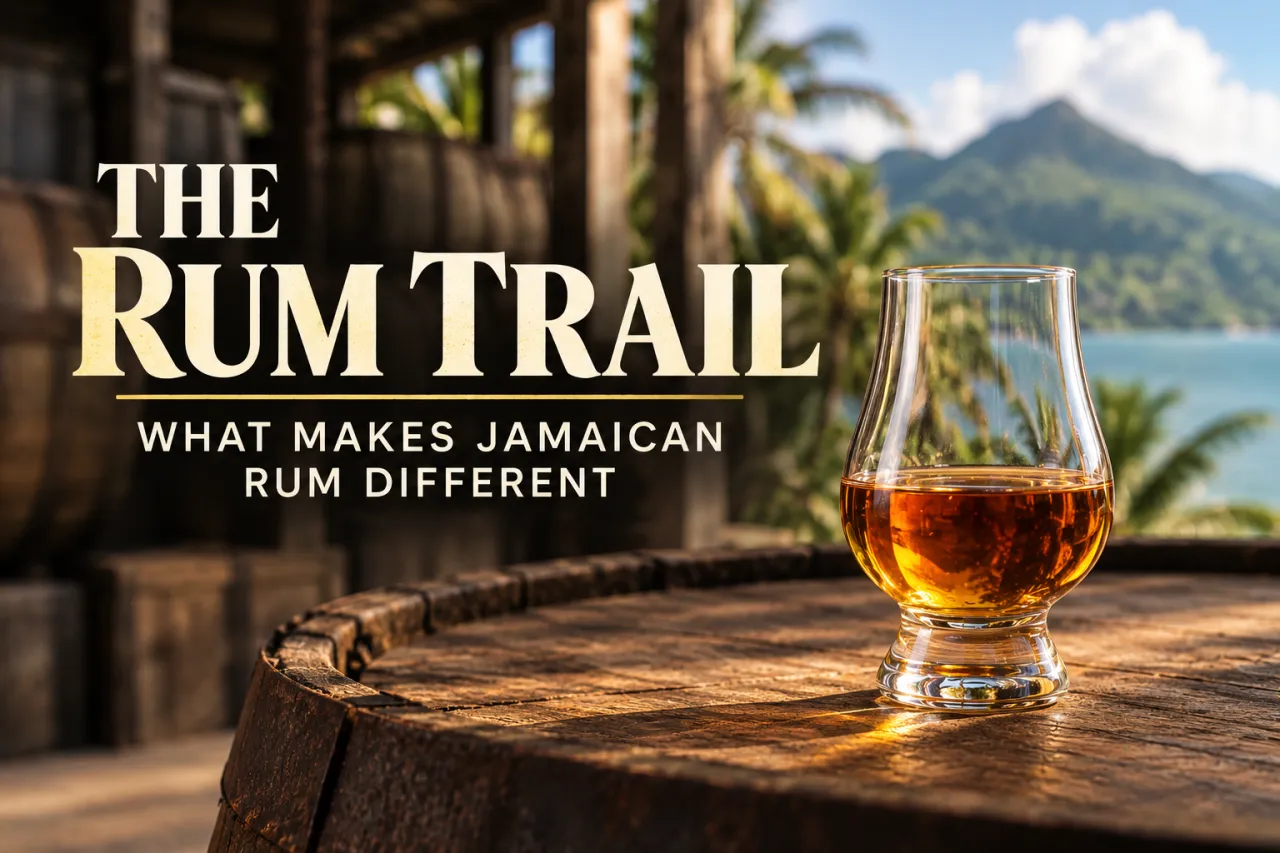
The Rum Trail: What Makes Jamaican Rum Different
By Dave C & Boozeopedia AI Workflow
See how we write our articles
Jamaican rum is famous for bold fruit, big aromas, and what rum drinkers often call "funk." That's useful shorthand, but it doesn't describe every bottle made on the island.
Some Jamaican rums are intensely aromatic pot-still spirits. Others combine pot- and column-distilled rum for a rounder, more restrained profile. Fermentation can range from relatively controlled to deliberately complex, and aging and blending add another layer of variation.
So what actually makes Jamaican rum different? Much of the answer comes down to fermentation, ester development, distillation, and the tradition of producing different rum marques for different flavor profiles.
Jamaican Rum Has Deep Roots in the Sugar Trade
Jamaica's rum history is tied directly to the growth of its colonial sugar industry.
After the English seized Jamaica from Spain in 1655, sugar cultivation expanded rapidly. The Jamaica Information Service records 57 sugar estates in 1673 and nearly 430 by 1739.
That growth depended heavily on enslaved African labour. Sugar, molasses, and rum became valuable parts of the Atlantic colonial economy, while enslaved people were forced to provide the labour that made plantation production possible.
Rum production in Jamaica can be traced to the second half of the 17th century. Over time, Jamaican distillers developed a reputation for producing particularly flavorful spirits that were consumed locally, exported, and used as components in rum blends.
Today, Jamaica Rum is a protected geographical indication, tying the category to production on the island while still leaving plenty of room for different distilleries and styles.
Why Jamaican Rum Can Taste So Fruity
One of Jamaican rum's most recognizable traits is an aroma that can suggest ripe banana, pineapple, citrus, fermented fruit, or even something slightly overripe.
A major contributor is a group of aromatic compounds called esters.
In simple terms, esters can form when alcohols and acids react. Fermentation and other parts of the rum-making process influence which esters develop and in what concentrations.
Depending on the rum, those aromas might suggest:
- banana
- pineapple
- tropical fruit
- citrus
- flowers
- fermented or overripe fruit
At particularly high concentrations, some aromas can become much more intense and unusual.
That aromatic intensity is often what drinkers mean when they describe a Jamaican rum as funky. It isn't a technical classification, and not every Jamaican rum is especially funky.
Higher ester levels don't automatically mean better rum, either. They're simply one tool producers can use to create a particular style.
Fermentation Builds the Foundation
The still gets plenty of attention in rum discussions, but a lot of Jamaican rum's character develops before distillation begins.
Yeast converts sugars into alcohol during fermentation, but that process also produces many other compounds that affect aroma and flavor. Yeast strain, fermentation time, acidity, temperature, bacterial activity, and the composition of the fermentation all influence what eventually reaches the still.
There isn't one universal Jamaican method.
Appleton Estate, for example, ferments molasses with its own cultured yeast before using both pot and column distillation.
Hampden Estate takes a different approach and is particularly well known for producing a wide range of highly aromatic marques, including extremely high-ester distillates.
Worthy Park is another useful contrast. It controls sugar production, fermentation, distillation, aging, and bottling on the estate and distills its rum on a double-retort copper pot still.
Those differences matter. "Jamaican rum" tells you where the rum comes from, but the producer and production choices tell you much more about how a particular bottle might taste.
Dunder, Muck, and Jamaican Rum Mythology
Discussions of traditional Jamaican rum often bring up dunder and muck, sometimes to the point where they sound like requirements.
They're not.
Dunder is the liquid residue left after a fermented rum wash has been distilled. It can play different roles depending on the distillery and production process.
Terms such as dunder and muck are also associated with some traditional methods for creating intensely aromatic, high-ester Jamaican rum.
What matters is that these techniques aren't universal.
For example, Worthy Park treats and reuses its post-distillation dunder in other parts of the estate rather than defining its rum around a dunder-based fermentation system.
So when a bottle says Jamaican rum, don't assume it was made with one specific fermentation recipe. Different producers get to their desired flavor in different ways.
Jamaican Rum Isn't Always Pot-Still Rum
Jamaica is closely associated with copper pot stills, especially the double-retort pot stills used to produce rich, flavorful rum.
But Jamaican rum isn't exclusively pot-distilled.
Appleton Estate uses both traditional copper pot stills and column stills, then combines different distillates during blending. This allows the producer to balance heavier aromatic components with lighter ones.
Worthy Park, by contrast, produces rum using a pot-and-twin-retort still.
Jamaica's geographical indication also recognizes both copper pot stills and qualifying column stills.
Rather than asking whether Jamaican rum is "supposed" to be pot-distilled, the better question is what type of distillate a particular producer is making and how those components are used in the finished rum.
What Is a Rum Marque?
The word marque is especially useful when learning about Jamaican rum.
A marque identifies a particular style or specification of rum produced by a distillery. Different fermentation and distillation choices can create marques with substantially different aroma, body, and ester levels.
Hampden Estate makes the idea particularly easy to see. Its marques range from relatively lighter styles to distillates with extraordinarily high ester concentrations.
That means two rums made at the same distillery can smell and taste dramatically different.
For bartenders and blenders, those differences are useful. A lighter component can provide structure without dominating a blend, while a highly aromatic marque can contribute a large amount of character even when used in relatively small proportions.
What Does Jamaican Rum Taste Like?
There isn't a single Jamaican rum flavor profile.
More aromatic examples may emphasize ripe banana, pineapple, citrus, fermented fruit, spice, and other concentrated fermentation-derived aromas.
Aged rum can add flavors such as:
- vanilla
- oak
- baking spice
- cocoa
- coffee
- dried fruit
- citrus peel
Blending can soften some of the more intense fermentation notes while retaining enough fruit and aroma to keep the rum expressive.
That's why tasting one Jamaican rum isn't enough to understand the category. A balanced aged blend and an intensely aromatic pot-still rum can feel like very different spirits even though both come from Jamaica.
Three Jamaican Rum Cocktails to Try
Cocktails make these differences easier to understand because you can see how the rum behaves alongside other ingredients.
Mai Tai
Our Trader Vic's Mai Tai combines Jamaican rum with fresh lime, orange curaçao, orgeat, and rock candy syrup.
It's an especially useful showcase because there isn't a large amount of tropical juice covering the base spirit. Lime provides acidity, curaçao adds orange, and orgeat contributes almond richness while leaving the rum clearly recognizable.
Try making the same Mai Tai with two contrasting Jamaican rums and the difference can be striking.
Planter's Punch
The Planter's Punch is even simpler: Jamaican rum, fresh lime juice, sugar cane juice, and dilution.
With such a short ingredient list, the choice of rum has an obvious effect on the finished drink.
A more restrained Jamaican rum produces a cleaner punch. A more aromatic one pushes tropical fruit and fermentation character much further forward.
Shanghai Cocktail
Jamaican rum also works well outside the tropical-cocktail playbook.
The Shanghai Cocktail combines it with lemon juice, anisette, and grenadine.
Anise and fresh citrus are assertive flavors, so a characterful Jamaican rum has enough presence to remain noticeable. It's a useful reminder that Jamaican rum can work in compact, spirit-forward classics as well as punches and tiki drinks.
How to Choose a Jamaican Rum
There isn't one bottle that represents the entire category, so start with how you plan to use it.
For an approachable starting point: Look for a balanced aged Jamaican rum. These can offer fruit, spice, oak, and enough aromatic character to be distinctive without overwhelming a cocktail.
For Mai Tais and rum-forward cocktails: A more aromatic pot-still expression can make the rum much more noticeable against citrus, syrups, and liqueurs.
For sipping: Aged expressions can combine Jamaica's fermentation-driven character with vanilla, oak, cocoa, dried fruit, spice, and other barrel-derived flavors.
For experimenting: High-ester or higher-proof Jamaican rum can be extremely expressive. You don't always need to use it as the entire base. Splitting it with a softer rum can add aroma without letting one component dominate the drink.
You can also browse the Jamaican Rum ingredient page for more Boozeopedia recipes that use it directly.
The Best Way to Understand Jamaican Rum Is to Compare It
The easiest way to understand the category isn't to memorize terms such as ester, marque, or dunder. Taste two noticeably different Jamaican rums side by side.
Start with a balanced aged expression, then compare it with something more aromatic or pot-still driven. Smell them before tasting. Look for differences in fruit, fermentation character, oak, spice, and intensity.
Then try both in a simple cocktail such as a Mai Tai or Planter's Punch.
That comparison makes the point better than any definition: Jamaican rum isn't one flavor. Its character comes from generations of producers using fermentation, distillation, aging, and blending to create a remarkably broad range of spirits.
Next on the Rum Trail, we'll visit Barbados and take a closer look at another major Caribbean rum tradition, including the often-repeated claim that Barbados is the birthplace of rum.