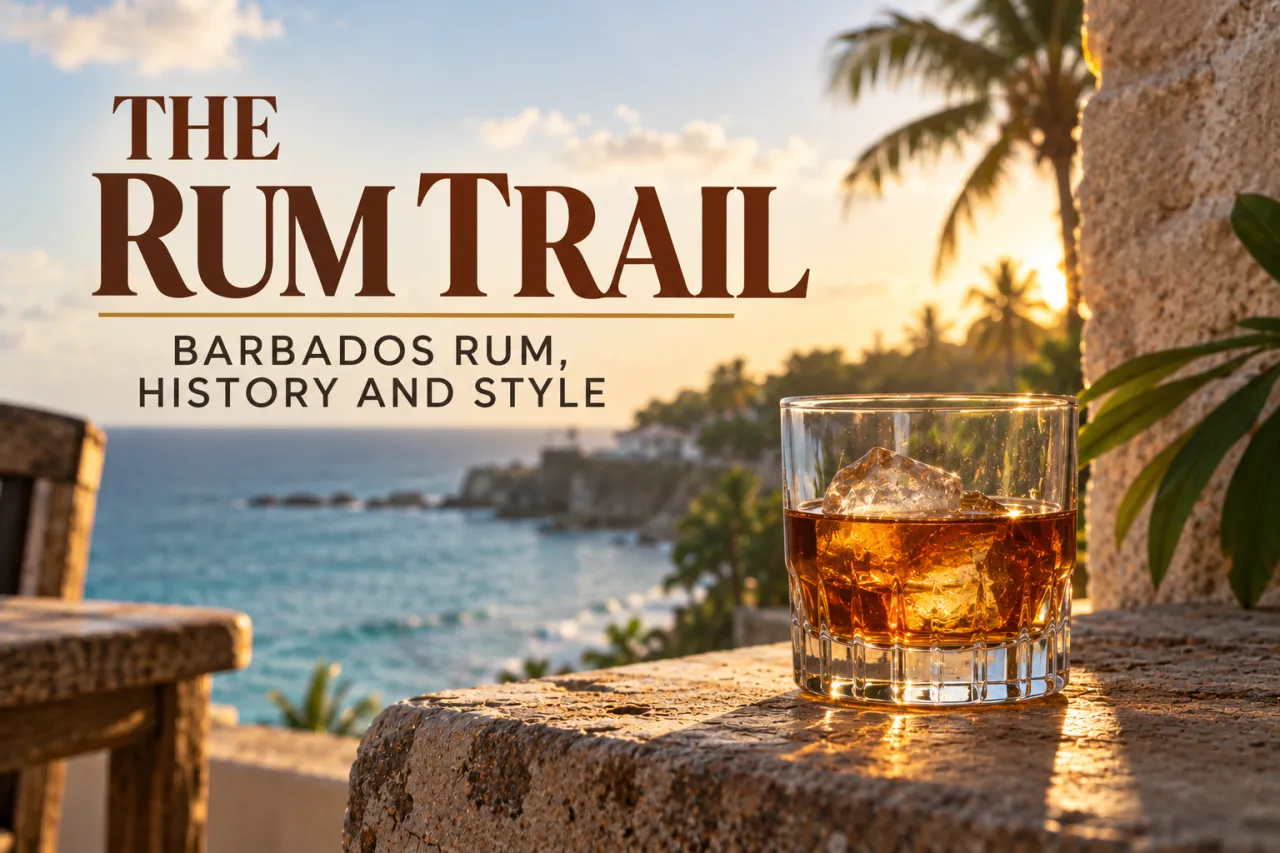
The Rum Trail: Barbados Rum, History and Style
By Dave C & Boozeopedia AI Workflow
See how we write our articles
The Rum Trail: Barbados Rum, History and Style
Barbados has one of the strongest historical claims to being rum's birthplace. More importantly, it has unusually early written evidence showing that sugarcane spirits were being produced on the island by the middle of the 17th century.
That history still matters, but modern Barbados rum isn't one fixed style. Producers use different combinations of pot and column stills, fermentation methods, raw materials, aging, and blending to create noticeably different spirits.
If you're coming from our Jamaican rum guide, the contrast is useful. Jamaica is particularly famous for highly aromatic, fermentation-driven rum. Barbados is often associated with balanced aged blends, but that's a tendency rather than a rule.
Did Rum Begin in Barbados?
Barbados has some of the earliest surviving written references to a distilled Caribbean sugarcane spirit.
A 1651 account from Barbados refers to a drink called "Rumbullion, alias Kill-Devill." A few years later, Richard Ligon's A True & Exact History of the Island of Barbados, published in 1657 after his time on the island, described a locally distilled drink called kill-devil made from material generated during sugar production.
Those records make Barbados central to the early history of Caribbean rum.
They don't prove that one person on Barbados invented every form of sugarcane spirit or that distillation from cane had never occurred elsewhere. Distilled cane drinks existed outside the Caribbean, and rum emerged through a wider exchange of agriculture, distilling knowledge, labour, and trade.
So calling Barbados the birthplace of rum is reasonable historical shorthand. It's better understood as a claim based on exceptionally early documentation than as a simple invention story with one date and inventor.
Sugar, Slavery, and Early Barbados Rum
Rum's early development on Barbados was inseparable from the island's colonial sugar economy.
After English settlement expanded in the 17th century, Barbados became a major sugar-producing colony. Plantation wealth depended heavily on the forced labour of enslaved Africans, who grew and processed the cane that supported the sugar, molasses, and rum trades.
Older versions of rum history sometimes reduce this period to a clever discovery that leftover molasses could be fermented and distilled. The reality was more complicated.
Early accounts refer to spirits made from materials generated during sugar processing, including skimmings from the boiling process. Production changed over time as sugar refining and distillation developed.
What is clear is that rum became commercially important alongside the plantation economy that produced it.
Pot Stills, Column Stills, and Blending
Barbados rum is often associated with combining pot-still and column-still distillates.
Pot stills generally produce heavier spirits with more flavor compounds carried through distillation. Column stills can produce lighter distillates. A blender can combine the two to adjust body, aroma, texture, and intensity.
Mount Gay is a well-known modern example, using both traditional copper pot stills and column stills before blending different components.
Foursquare is also closely associated with combinations of pot- and column-distilled rum.
This approach is sometimes described as the classic Barbados style. It's a useful reference point, but it isn't a rule that every Bajan rum must follow.
The better way to understand Barbados rum is to look at what each producer actually does.
Barbados Distilleries Take Different Approaches
Four distilleries are particularly important to modern Barbados rum: Mount Gay, Foursquare, St. Nicholas Abbey, and the West Indies Rum Distillery.
Mount Gay has documented roots reaching back to 1703 and uses both pot and column stills. Its aged blends are useful examples of how different distillates can be combined with barrel maturation to create a balanced final rum.
Foursquare, operated by the Seale family, opened its modern distillery at the historic Foursquare site in the 1990s. It is particularly known among rum enthusiasts for pot-and-column blends and extensive maturation in Barbados.
St. Nicholas Abbey provides an important exception to the idea that all Barbados rum begins with molasses. Its modern rum production uses sugarcane from the estate that is processed into cane syrup, and its Annabelle still combines pot and column elements.
West Indies Rum Distillery, near Bridgetown, represents another longstanding part of Barbados's commercial rum industry and produces a range of rum styles.
The point isn't that one of these approaches is more authentic than the others. It's that Barbados has a shared rum tradition without requiring every distillery to make the same spirit.
What Does Barbados Rum Taste Like?
There isn't one universal Bajan rum flavor profile.
Younger and lighter expressions may emphasize fresh fruit, sugarcane character, citrus, and gentle spice.
Barrel-aged rums can develop flavors such as:
- vanilla
- toasted oak
- caramel or toffee
- baking spice
- dried fruit
- citrus peel
- cocoa
- coffee or roasted notes
Pot-still components can add extra weight and aromatic intensity, while lighter column-distilled components can bring a cleaner structure to a blend.
You'll often see Barbados rum described as smooth or balanced. Those words can be useful, but they're too broad to define an entire island's production.
Tropical Aging Makes a Difference
Much of Barbados's aged rum matures in the Caribbean rather than being shipped elsewhere immediately after distillation.
The warm climate changes how spirit interacts with the barrel. Higher temperatures generally mean more active interaction between wood and spirit as well as greater evaporation.
That doesn't mean a rum aged for five years in Barbados is simply equivalent to a much older spirit aged somewhere cooler. Maturation in different climates develops spirits differently.
For the drinker, the practical result is that Barbados-aged rum can develop substantial oak, vanilla, spice, caramel, and dried-fruit character within comparatively modest age statements.
Barrel type matters too. Mount Gay, for example, describes using casks that have previously held American whiskey, bourbon, Cognac, and other spirits depending on the release.
Three Cocktails to Try With Barbados Rum
Cocktails are one of the easiest ways to see what a Barbados rum contributes to a drink.
Bajan Rum Old Fashioned
The Bajan Rum Old Fashioned is the clearest Barbados-specific cocktail currently in the Boozeopedia database.
It combines aged Barbadian rum with demerara syrup, Angostura bitters, orange bitters, and expressed orange peel.
Because the supporting ingredients are restrained, the rum stays in the foreground. Demerara adds rich sweetness, bitters bring spice and citrus, and dilution opens the aged rum without covering its oak and fruit.
If you want to understand what an aged Barbados rum tastes like in a cocktail, this is the place to start.
Daiquiri
The classic Daiquiri is made with light rum, fresh lime, and simple syrup.
It's a Cuban cocktail rather than a Barbadian one, and the Boozeopedia recipe doesn't specifically call for Barbados rum. Still, its simple structure makes it excellent for comparing spirits.
Try replacing the light rum with a lightly aged Barbadian rum. You'll usually pick up more oak, vanilla, spice, or fruit while keeping the basic rum-lime-sugar structure intact.
That's an adaptation of the recipe, not the original specification.
Caribbean Rum Punch
Our Classic Caribbean Rum Punch combines light and dark rum with lime, pineapple, orange, grenadine, bitters, and fresh nutmeg.
The recipe specifically suggests aged Barbadian rum as an option for the darker rum component.
That works particularly well because oak and spice can stand up to the fruit while complementing the bitters and nutmeg.
Barbados also has its own long rum-punch tradition, often remembered through the old rhyme built around sour, sweet, strong, and weak.
Rum Shops and Everyday Drinking Culture
Rum's place in Barbados extends beyond distilleries and export bottles.
The island's rum shops have long functioned as neighbourhood social spaces as well as places to buy and drink rum. People gather to talk, eat, play dominoes, follow sports, and spend time together.
That makes the rum shop a useful reminder that Barbados rum isn't only a premium sipping category or a tourism product. It also has a long everyday social history on the island.
Rum is visible during major celebrations as well, including Crop Over, but it shouldn't be used as shorthand for the festival itself.
Crop Over developed from celebrations surrounding the end of the sugar harvest and has grown into a major national festival of music, masquerade, food, performance, and Barbadian culture. Its connection to the sugar economy is historically relevant, but rum is only one part of a much larger tradition.
How to Choose a Barbados Rum
Start with what you want the bottle to do.
For Daiquiris, highballs, and punches: Look for a younger or lightly aged rum that has enough character to remain noticeable without bringing too much barrel influence.
For an Old Fashioned: An aged Barbadian rum with vanilla, fruit, oak, and spice gives the simple spirit-sugar-bitters formula plenty to work with.
For sipping: Compare producers rather than focusing only on age statements. Different stills, blends, raw materials, and barrel programs can matter as much as the number on the label.
For learning: Taste two contrasting Barbados rums side by side. A lighter blend and a richer pot-still-influenced expression will teach you more about the category than trying to find one bottle that supposedly represents the whole island.
You can also browse the Barbadian Rum ingredient page as more recipes using the category are added to Boozeopedia.
Barbados Doesn't Need a Simple Origin Story
Barbados deserves its place near the beginning of rum history because the documentary record is remarkably strong.
But its modern importance isn't limited to being first.
Today's Barbados distillers use different stills, raw materials, aging programs, and blending strategies to produce a broad range of rum. The useful question isn't whether every Bajan bottle fits one traditional flavor profile. It's how each producer uses those tools to create its own version of Barbados rum.
If you want to explore that range for yourself, compare two Barbados rums neat first, then use them in the same Daiquiri or Rum Old Fashioned. The differences become much easier to understand once everything else in the glass stays the same.
Next on the Rum Trail, we'll head to Martinique, where fresh sugarcane juice and AOC production rules create a very different rum tradition.