The Rum Trail: Martinique and Rhum Agricole
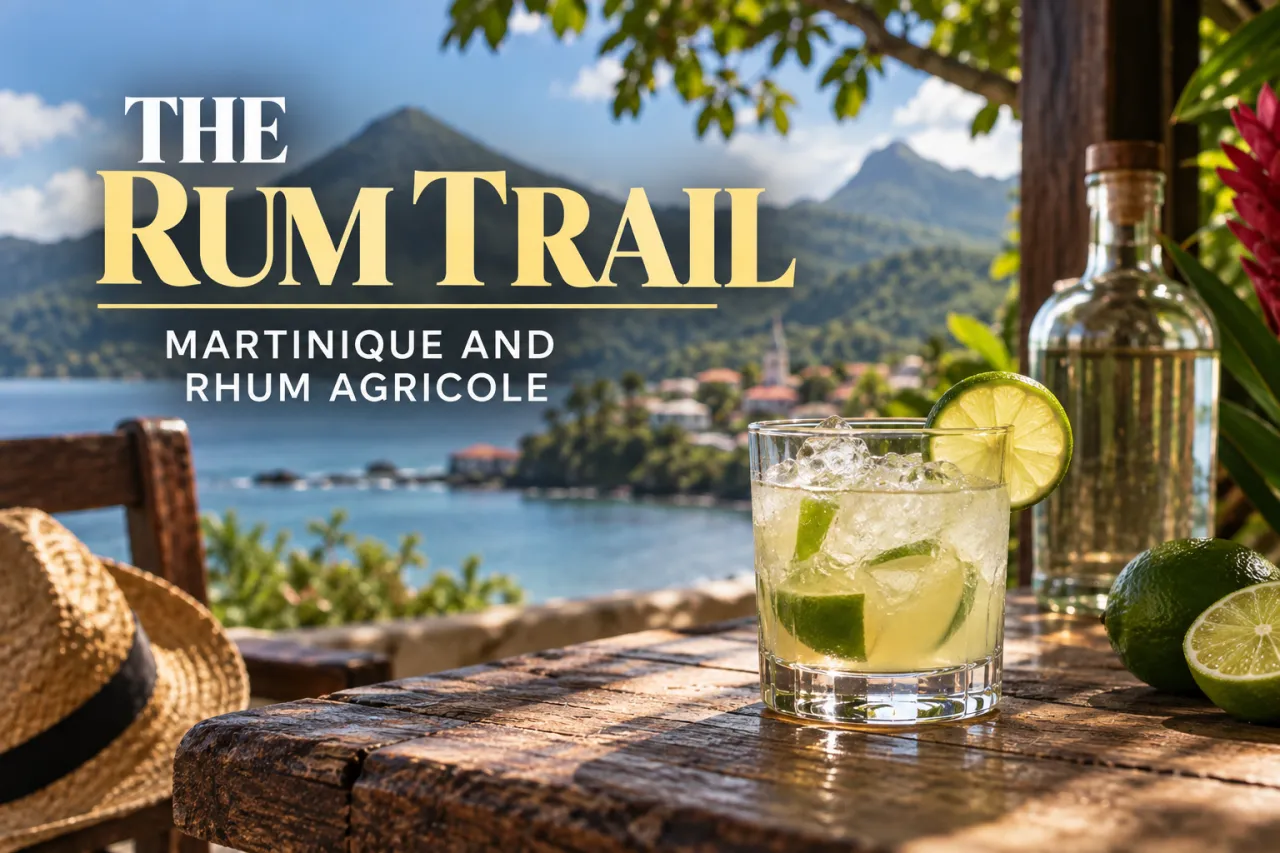
By Dave C & Boozeopedia AI Workflow
See how we write our articles
Martinique approaches rum differently from the molasses-based traditions many drinkers encounter first.
Its best-known spirit is rhum agricole, made by fermenting freshly pressed sugarcane juice rather than molasses. That gives the distiller a very different starting point, capable of producing grassy, floral, fruity, peppery, and earthy flavors that can remain recognizable even after time in oak.
Martinique also stands apart because qualifying rum is governed by an Appellation d’Origine Contrôlée, or AOC, with detailed rules covering where the cane comes from, how it is fermented and distilled, and how different categories of rum are matured.
If you're following the Rum Trail from Jamaica and Barbados, Martinique offers a clear contrast. Here, understanding the rum starts with fresh sugarcane juice.
What Is Rhum Agricole?
Rhum agricole is rum distilled from fermented fresh sugarcane juice rather than molasses.
That distinction matters.
Molasses is a concentrated byproduct of sugar production. Fresh cane juice carries more of the cane's immediate vegetal, fruity, and grassy character into fermentation. Distillation transforms those flavors, but well-made agricole can retain a recognizable fresh-cane identity.
That doesn't mean every agricole tastes like cut grass.
Depending on the producer, proof, fermentation, distillation, and aging, you may find aromas that suggest:
- fresh or dried grass
- sugarcane
- flowers
- citrus
- green or ripe fruit
- white pepper
- herbs
- earthy or mineral-like notes
Aged agricole can add oak, vanilla, spice, dried fruit, cocoa, roasted flavors, and other barrel-derived characteristics.
You can explore more recipes through Boozeopedia's Rhum agricole ingredient page.
Rhum Agricole Came Later in Martinique's Rum History
Martinique has a long sugar and rum history, but the fresh-cane tradition now called rhum agricole developed later.
Sugarcane plantations expanded under French colonial rule and relied heavily on the forced labour of enslaved Africans. Early rum production grew alongside that plantation economy, as it did elsewhere in the Caribbean.
Agricole emerged in the 19th century.
The official Martinique AOC specification identifies early agricultural rum production on the island during that period, including production at Fonds-Préville in Macouba. By the 1855 Paris exposition, Martinican agricultural rum had become established enough to earn recognition.
Its growth was linked in part to changes in the sugar industry. Some estates increasingly turned to distilling cane juice directly rather than focusing entirely on sugar production.
The distinction is important: Martinique produced rum long before the 19th century, but rhum agricole as a fresh-cane tradition came later.
What the Martinique AOC Actually Controls
Martinique rhum agricole received AOC recognition in 1996.
The official INAO profile for Rhum de la Martinique describes the appellation and the production rules attached to it.
Boozeopedia also has an explainer for Appellation d’Origine Contrôlée.
The rules cover considerably more than simply using fresh cane juice. They regulate areas including:
- where approved sugarcane may be grown
- sugarcane varieties and cultivation
- juice extraction
- fermentation
- still type and distillation
- distillation strength
- maturation and aging
- where production stages must take place
One common claim needs correcting: AOC Martinique rum does not have to be fermented and distilled within 24 hours of harvest.
The specification allows fermentation for up to 120 hours from the completion of vat filling through distillation.
Distillation uses a defined form of continuous column still, and the spirit collected during daily production must come off the still between 65% and 75% ABV.
That relatively modest distillation strength helps preserve more flavor compounds than highly rectified neutral-spirit production.
Blanc, Élevé Sous Bois, and Vieux
The AOC defines useful categories based on how the rum is rested or aged.
Blanc
AOC Martinique blanc is clear and receives no wood-derived color.
After distillation, it must rest in tanks for at least six weeks before release.
White agricole is often the easiest place to recognize fresh-cane character. Depending on the bottle, expect fruit, flowers, cane, herbs, pepper, and citrus.
It's also the natural starting point for a Ti’ Punch.
Élevé Sous Bois
Élevé sous bois, or "raised under wood," sits between white and fully aged rum.
The AOC requires at least 12 months in oak.
That brings in color, wood, spice, and vanilla while allowing much of the underlying agricole character to remain apparent.
Vieux
To use the AOC vieux designation, the rum must spend at least three years in oak vessels of less than 650 litres.
With longer maturation, the profile can move toward vanilla, wood spice, dried fruit, cocoa, roasted notes, and richer texture while still retaining elements of the cane distillate underneath.
Vintage-dated AOC rum carries additional aging requirements under the specification.
Agricole Doesn't Automatically Mean Martinique AOC
This distinction is easy to miss.
Fresh-cane rum is made outside Martinique, including elsewhere in the French Caribbean and in other sugarcane-producing regions.
So rhum agricole and AOC Martinique are not interchangeable terms.
A bottle can be agricole without being from Martinique.
What makes AOC Martinique distinct is that the rum must satisfy a specific geographic and production framework.
That makes the designation useful when shopping. It tells you much more about where and how the rum was made than the word "rum" alone.
What Does Martinique Rhum Agricole Taste Like?
Agricole is often described as grassy, but that's too narrow to define the category.
White Martinique AOC rum can show fruit, flowers, vegetal notes, citrus, pepper, herbs, and fresh cane.
Wood-aged versions can add spice, toasted notes, vanilla, dried fruit, cocoa, and other barrel-derived flavors.
A useful way to think about agricole is that fresh cane provides the foundation, while fermentation, distillation, proof, and aging determine how that character appears in the glass.
A crisp blanc might lean toward citrus, cane, pepper, and green fruit.
A mature vieux may show oak, spice, dried fruit, cocoa, and roasted flavors while still tasting noticeably different from a molasses-based aged rum.
Martinique Has More Than a Few Famous Producers
Martinique's rum landscape extends well beyond one or two familiar labels.
Producers and estates associated with the island include names such as Neisson, Depaz, Rhum J.M, Saint-James, La Mauny, Trois Rivières, Habitation Clément, La Favorite, and Habitation Saint-Étienne.
The official Martinique distillery directory is useful if you want to explore the island's producers and visitor sites in more detail.
The practical takeaway is simple: one bottle shouldn't define your idea of agricole. Different producers, cane-growing areas, proofs, and maturation programs can create noticeably different rums.
Three Cocktails That Show What Agricole Can Do
Ti’ Punch
If you try only one agricole cocktail, start with a Ti’ Punch.
The Boozeopedia recipe combines rhum agricole, cane syrup, and a slice of lime. The lime is gently squeezed for juice and aromatic oils, and the drink is traditionally served without ice.
There isn't much for the rum to hide behind.
That's exactly why it works so well as a tasting drink. Cane syrup softens the edges, lime adds brightness, and the agricole remains the dominant flavor.
Try the same build with two different blancs and the contrast can be surprisingly obvious.
Punch Planteur
The Punch Planteur takes agricole in a fruitier direction.
It combines rhum agricole with orange, pineapple, lime, grenadine, Angostura bitters, and fresh nutmeg.
Agricole works well here because its vegetal, earthy, and fresh-cane character gives the drink a recognizable spirit backbone even against pineapple and orange.
The result is fruit-forward without making the rum disappear.
Three Dots and a Dash
Agricole also works well outside Martinican drinks.
Our Three Dots and a Dash combines rhum agricole with aged rum, falernum, allspice dram, citrus, honey, bitters, and crushed ice.
It's a tiki classic rather than a Martinican cocktail, but it shows how agricole can contribute definition to a complicated recipe.
Even among spice, citrus, honey, and another rum, its fresh-cane character adds a distinct layer to the base.
How to Choose a Rhum Agricole
Start with what you want the bottle to do.
For Ti’ Punch and simple sours: Blanc is the clearest expression of fresh cane and the easiest place to learn the style.
For mixed drinks with a little more roundness: Élevé sous bois brings some oak and spice without moving fully into mature-rum territory.
For sipping or spirit-forward cocktails: Vieux combines the agricole base with more substantial barrel influence.
For learning the category: Compare a white and aged expression from the same producer if possible. That makes it easier to taste what oak adds without changing every other variable at the same time.
And if you're choosing between AOC Martinique and another agricole, don't assume one is automatically better. The AOC tells you that the Martinique bottle followed a particular regulated system. Excellent fresh-cane rum can be made elsewhere under different rules.
Martinique's Difference Starts With Fresh Cane
Martinique rhum agricole doesn't need vague claims about terroir to be interesting.
Its defining differences are concrete: fresh sugarcane juice instead of molasses, controlled growing areas, regulated fermentation and distillation, defined maturation categories, and an AOC system that ties production to place.
The easiest way to understand those differences is still to taste them.
Start with a blanc in a Ti’ Punch. Then compare it with an élevé sous bois or vieux, either neat or in a simple cocktail. You'll be able to taste what remains from the fresh cane and what changes once oak enters the picture.
Next on the Rum Trail, we'll head to the Dominican Republic, where the history and modern rum industry follow a very different path.