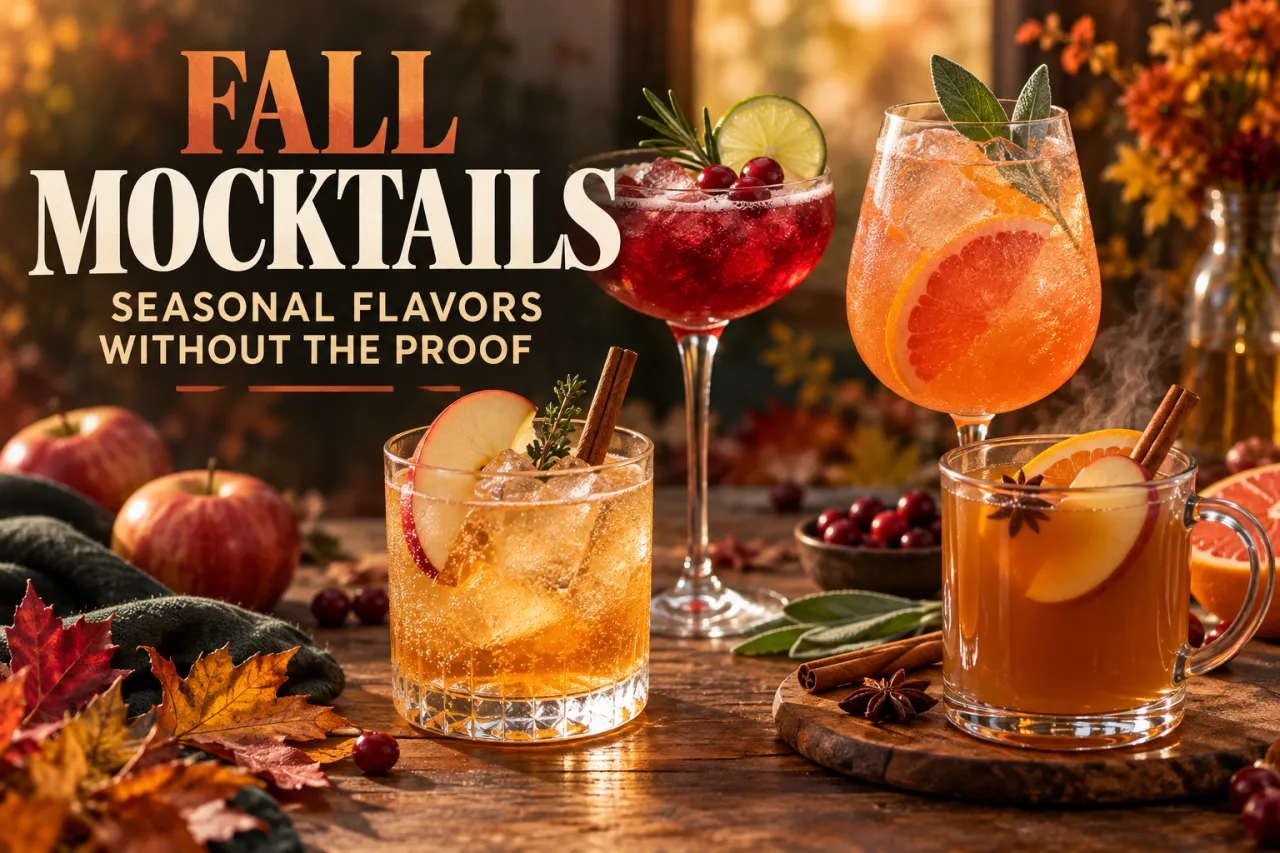
Fall Mocktails: Seasonal Flavors Without the Proof
The Autumn Spirits Series – Part 5 of 5
Fall drinks don't need whiskey, rum, or brandy to taste like the season. Apple cider, cranberry, citrus, maple, warming spices, and fresh herbs can build fall mocktails with plenty of flavor and structure on their own.
That makes zero-proof drinks especially useful when you're hosting. Instead of treating the alcohol-free option as an afterthought, you can put something on the table that feels just as considered as the cocktails.
This final installment of the Autumn Spirits Series focuses on a few Boozeopedia mocktails that fit the season, plus practical ways to make alcohol-free drinks taste balanced rather than simply sweet.
What Makes a Good Fall Mocktail?
Removing the spirit changes more than the alcohol content. Spirits bring aroma, bitterness, warmth, and body, so a good mocktail needs other ingredients to do some of that work.
For fall drinks, a few elements are especially useful:
- Orchard fruit: Apple, pear, and cider give a drink an immediate autumn character.
- Acidity: Lemon, lime, cranberry, and grapefruit keep sweeter juices and syrups from becoming heavy.
- Spice and herbs: Cinnamon, clove, sage, rosemary, ginger, and similar ingredients add aroma and complexity.
- Carbonation: Sparkling water, soda water, or sparkling cider can make fruit-based drinks feel lighter and livelier.
- Temperature: Hot cider emphasizes spice and comfort, while plenty of ice keeps sweeter cold drinks crisp.
You don't need every element in every glass. The useful rule is simpler: if a mocktail tastes too sweet, add acidity or dilution. If it tastes thin, add aroma, fruit, spice, or texture.
Four Fall Mocktails to Try
Sparkling Apple Cider Spritz
The Sparkling Apple Cider Spritz is the easiest place to start. Sparkling apple cider provides both fruit and bubbles, while orange juice adds citrus sweetness. An apple slice finishes the drink without turning it into a garnish project.
It's particularly handy for brunch or an early fall gathering because it has the festive feel of a sparkling cocktail without requiring a shaker or specialty ingredients.
If your sparkling cider runs sweet, a splash of sparkling water can lighten it. For a more tart variation, cranberry juice also works well alongside the apple.
Cranberry Sparkler
For something brighter and less apple-forward, try the Cranberry Sparkler.
Cranberry juice supplies tart fruit flavor, lime sharpens it further, and a small amount of simple syrup rounds out the acidity. Sparkling water keeps the finished drink light.
This is a useful Thanksgiving-table option because it can stand up to rich food without adding another heavily spiced or sugary flavor to the meal.
One practical note: cranberry products vary considerably in sweetness. Taste before automatically adding more syrup. It's much easier to sweeten a tart drink than rescue one that has become cranberry candy.
Citrus Sage Spritz
Fall doesn't have to mean putting cinnamon in everything.
The Citrus Sage Spritz combines orange and grapefruit juices with honey syrup, soda water, and fresh sage. The sage gives the drink an earthy herbal aroma that feels seasonal without relying on the usual pumpkin-and-spice treatment.
Grapefruit also brings a pleasantly tart edge that helps keep the honey and orange in check.
This is the mocktail to reach for when the rest of your fall menu is already rich. It's bright, herbal, and refreshing enough to work before dinner rather than competing with dessert.
Hot Spiced Apple Cider, Without the Rum
Boozeopedia's Holiday Apple Cider is written as a large-batch cocktail with dark rum, but the recipe also includes a straightforward non-alcoholic variation: leave out the rum.
The remaining combination of apple cider, cinnamon, cloves, orange, and fresh apple already has enough flavor to stand on its own.
The key is gentle heat. Let the whole spices and fruit infuse the cider instead of aggressively boiling it. Whole spices are also easier to strain than ground cinnamon or clove, which can leave the finished drink gritty.
For a party, this is the low-maintenance option. Make a batch, strain it, and keep it warm for guests to serve themselves.
How to Keep Fall Mocktails From Becoming Too Sweet
This is where many alcohol-free drinks go wrong.
Apple cider, cranberry cocktail, sparkling cider, syrups, and ginger ale can all contribute sugar. Stack too many of them together and the drink quickly loses definition.
Three easy fixes help:
- Add citrus. Lemon and lime are the quickest tools for correcting excessive sweetness.
- Use unsweetened bubbles. Sparkling water or soda water adds length without adding more sugar.
- Taste before adding syrup. Juice and cider vary from brand to brand, so a fixed amount of sweetener isn't always necessary.
Tea is another useful ingredient when you want complexity without additional sweetness. Black tea can bring tannin and body, while herbal teas can contribute spice, citrus, or floral notes.
Building a Fall Mocktail Bar for a Party
You don't need eight finished recipes lined up on the counter. A small mix-and-match setup is easier for the host and gives guests some control over sweetness and flavor.
Start with a few components:
- Bases: apple cider, cranberry juice, chilled tea
- Bubbles: sparkling water and sparkling apple cider
- Acid: fresh lemon and lime juice
- Sweeteners: maple syrup, honey syrup, or simple syrup
- Aromatics: cinnamon sticks, sage, rosemary, citrus peel
- Fresh additions: apple slices, orange wheels, or cranberries
Guests can build something crisp and sparkling or richer and more cider-forward without needing a full bar's worth of bottles.
For anyone who needs a strictly alcohol-free drink, check the labels on ingredients such as bitters, extracts, and specialty zero-proof products rather than assuming every cocktail-style ingredient is completely alcohol-free.
A Few Hosting Tricks That Actually Help
Batch the still ingredients first. Juice, cider, tea, citrus, and syrup can usually be combined ahead of serving. Add sparkling water or other carbonated ingredients at the end so they don't go flat.
Offer at least one less-sweet option. Not everybody wants a dessert drink. A tart cranberry sparkler or citrus-and-herb spritz gives guests a useful alternative to rich cider.
Use garnish for aroma, not clutter. An apple slice, citrus peel, cinnamon stick, or fresh herb is enough. There's no need to turn the glass into a fruit basket.
Serve hot and cold choices when the weather calls for it. A chilled spritz and a pot of warm spiced cider cover very different moods with relatively little extra work.
Fall Flavor Doesn't Need the Proof
Good fall mocktails aren't consolation prizes for people skipping alcohol. They're drinks built around the ingredients that already make the season interesting: orchard fruit, tart cranberry, citrus, herbs, bubbles, and warm spice.
Start with the Sparkling Apple Cider Spritz if you want something easy and festive, the Cranberry Sparkler for a tart crowd-pleaser, or warm spiced cider when the temperature drops.
And if you're following the full Autumn Spirits Series, the previous installment is Fireside Nightcaps: After-Dinner Drinks for Cold Evenings. This final chapter simply makes sure there's a good fall drink in the glass whether or not there's alcohol in it.