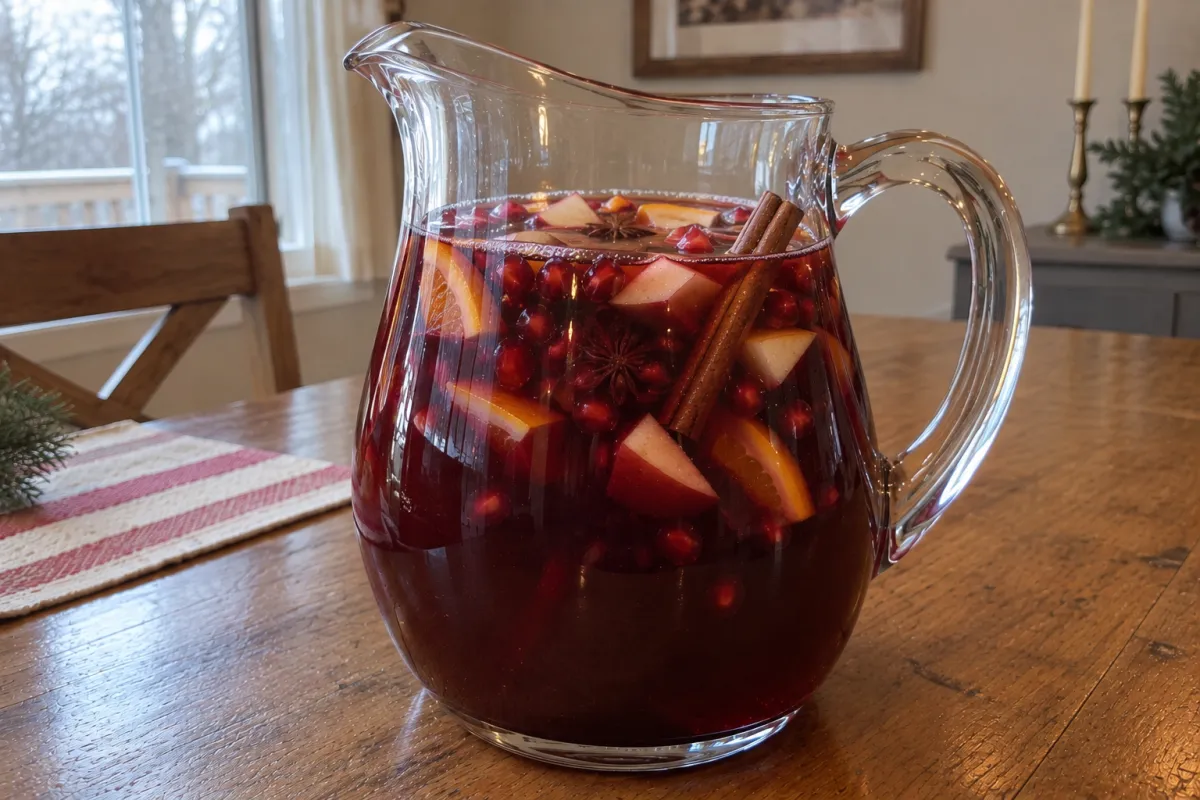
Winter Sangria turns a bottle of red wine into a festive pitcher with brandy, orange liqueur, fresh fruit, and aromatic winter spices. Apples, oranges, and pomegranate add fresh fruit character, while cinnamon, star anise, and clove bring the seasonal edge. Make it several hours ahead, then finish each glass with sparkling water.
Background
Sangria is closely associated with Spain and Portugal, but there is no single definitive formula for the drink. Wine and fruit form the foundation, with spirits, sweeteners, spices, and sparkling mixers varying considerably between recipes. This winter variation leans into the format with red wine, brandy, citrus, orchard fruit, and warming whole spices.
What You'll Need
Ingredients
- Red Wine provides the wine base. A dry, fruit-forward red keeps the finished pitcher from becoming overly sweet.
- Brandy adds depth and reinforces the fruit character of the wine.
- Orange Liqueur brings concentrated citrus flavor and additional sweetness.
- Sugar balances the wine to taste rather than forcing the pitcher toward a fixed sweetness.
- Apple adds crisp orchard-fruit character and holds up well during a long infusion.
- Orange contributes fresh citrus flavor and aroma.
- Pomegranate Seeds add tart fruit character, color, and texture.
- Star Anise contributes a concentrated licorice-like spice note, so controlled infusion matters.
- Cinnamon Stick adds warm spice without introducing powdered sediment.
- Clove supplies intense aromatic spice and should not dominate the wine.
- Sparkling Water lightens each serving and adds carbonation just before drinking.
Equipment
- Large pitcher
- Long spoon
- Knife and cutting board
- Serving glasses
A Sangria Built for Cold-Weather Gatherings
This version keeps the easy, shareable structure that makes sangria useful for entertaining but changes the flavor profile for winter. Brandy and red wine give it depth, fresh fruit keeps the pitcher lively, and controlled spice infusion adds cinnamon, clove, and star anise without overwhelming the wine.
Substitutions & Variations
- Use a dry, fruit-forward Spanish red such as Tempranillo or Garnacha, or another uncomplicated dry red you enjoy drinking.
- Cognac can replace the brandy for a polished variation with a similar role in the recipe.
- Use a drier orange liqueur and start at the low end of the sugar range if you prefer less sweetness.
- Swap some of the apple for pear for another winter-fruit variation.
- For more fizz, add sparkling water to individual glasses rather than the pitcher so it stays carbonated.
- For a lighter variation, reduce the brandy slightly and use a more generous sparkling-water finish.
Helpful Tips
- Give the fruit at least four hours to infuse when possible.
- Taste the spices after about two hours. Clove and star anise can become dominant during a long infusion.
- Keep the pitcher refrigerated while it infuses.
- Taste before adding additional sugar. Wine and orange liqueur vary considerably in sweetness.
- Add sparkling water only when serving so it retains its carbonation.
- Include some fruit in each glass, but avoid loading glasses with whole spices.
- For a party, prepare the wine-and-fruit mixture the night before, remove the spices once balanced, and refrigerate until serving.